


“Perfume can pierce right through us: it speaks directly to that part of the brain older than words and logic. Through scent, your ancient instinct hears: ‘this is safe, delicious, sexual, new’ — and the body reacts instantly.”
The perfumery review is conducted by Anastasia Gracheva; the article is of a recommendatory-historical nature and is based on the author’s personal experience and love for perfumery and mythology.
All images, characters, and associations with perfume houses are the author’s artistic, mythological interpretation for educational and review purposes. They have no relation to real brands, their products, or the official position of the companies. Names are used solely to illustrate the history of perfumery.
Table of Contents of the article: Advice on choosing perfume as a gift, categories and examples Scent — the most ancient sense. The science and phenomenon of perfumery The Worldview of Perfumery: Three Whales and Others Dior, Chanel, Guerlain, Coty, Lancôme, Hermès, Givenchy, Trussardi, Kenzo, Sisley Paris, Cacharel, Creed, Narciso Rodriguez
“Fragrances have been my whole life ever since my not-yet-very-sensitive child’s nose caught something extraordinary in a sample of unknown perfume. A frosty evening, fur on the sleeves, an evening trip to the theater, and my mother’s friend gives me two tiny perfume samples. The entire journey to the theater and back I spray them on myself, drowning in new emotions. Many years later, my brain suggests that the note that pierced me like an arrow of love for perfumery was merely a modest iris… Not very fashionable, and therefore rare in those snowy vintage years… Or perhaps it was Parma violet, though how could it have appeared in the snows of Moscow back then? Perhaps fragrances truly know no boundaries of time or space.”
From the fantasy story by Anastasia Gracheva “Winter Circle or Almost a Christmas Story”
Every emotion we have, every memory, every change in life corresponds to some perfume. And this is a scientific fact, based among other things on anatomy. Scent is the most ancient sense, still penetrating directly into the brain. Olfaction develops one of the first (even in the womb), and it “remembers” the world without the censorship of adult consciousness.
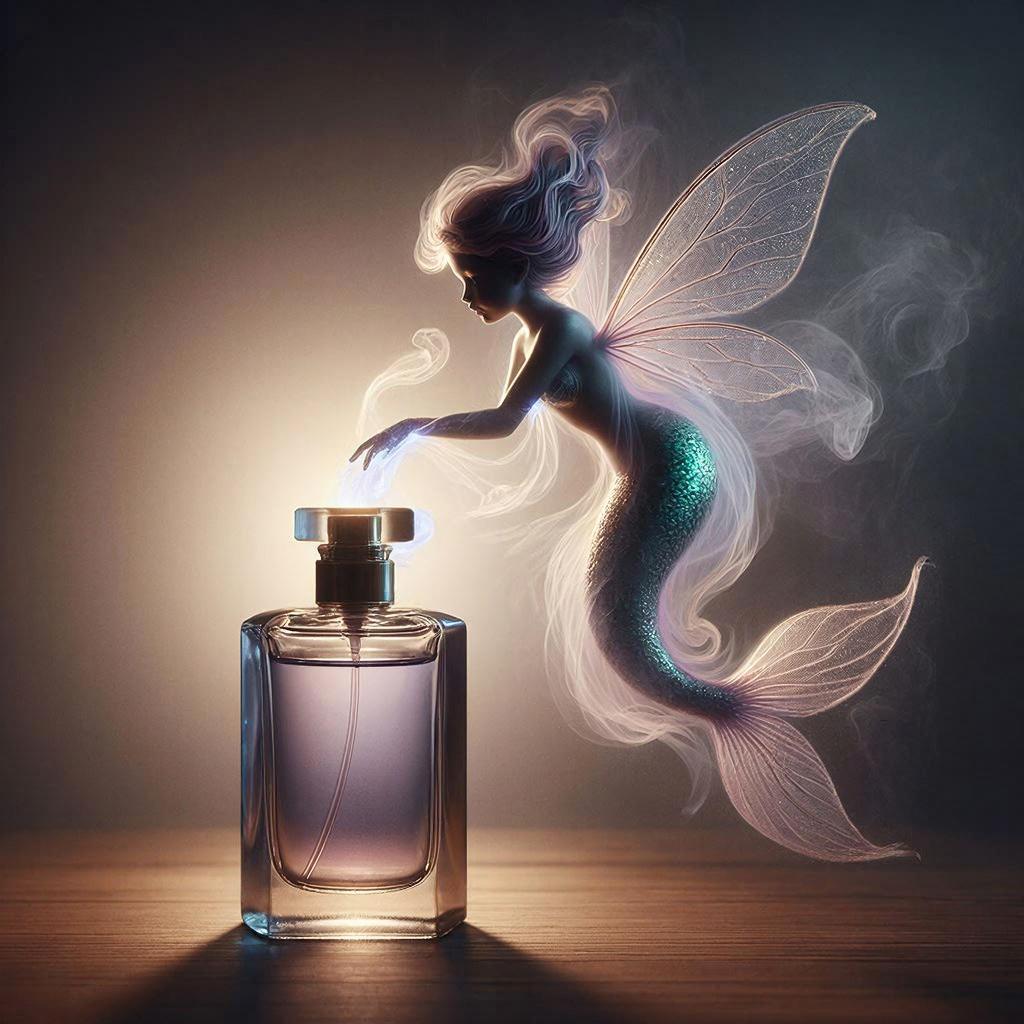
The sudden trail of that very perfume that once filled your grandmother’s hallway or wafted from your mother’s collar — doesn’t it transport you for a second back into a child’s body? The fragrance you wore in your youth or before your wedding — doesn’t it give you energy and that very bravado inherent in the “young and daring”? Scents can change our thoughts, states, and actions… Think about what (or perhaps who?) you are missing so much right now in your world, in your actions and decisions, who you would like to become?
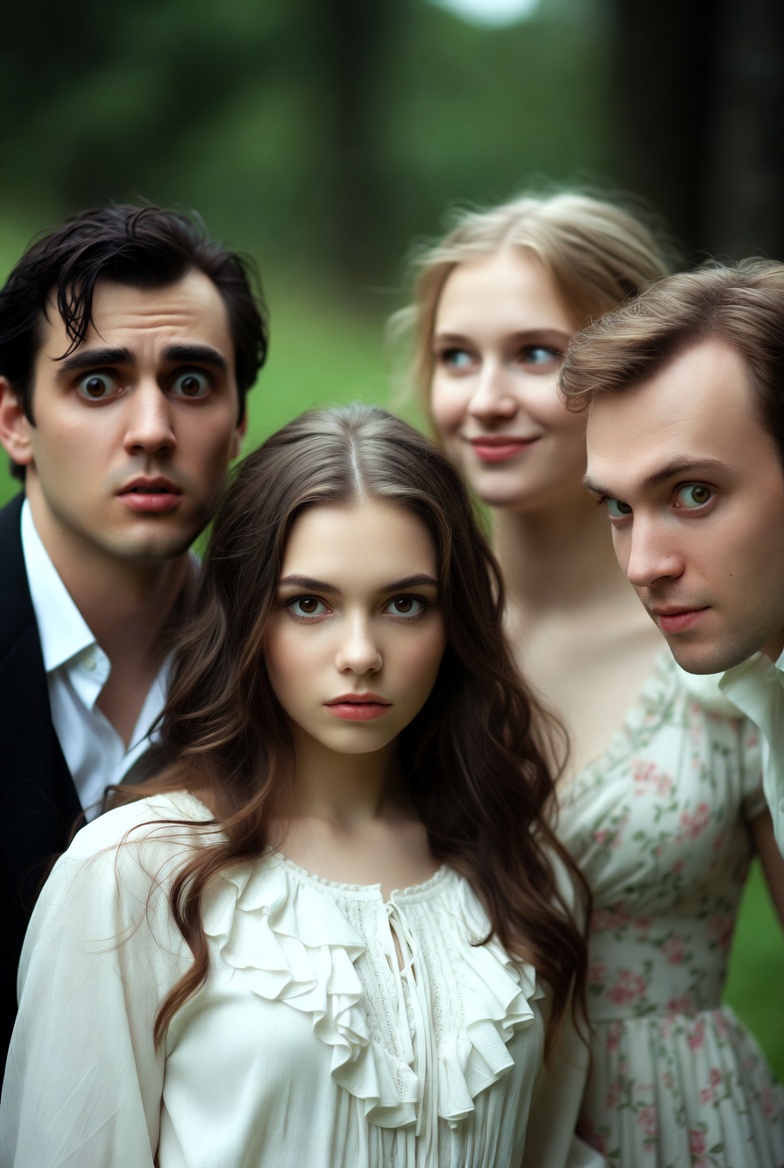
fantasies of Anastasia about the multifaceted female images, inspired by the fragrance from Rodriguez
In each of our lives, scents have their own parallel line of fate.
Let’s figure out how to choose for each of us that magical perfume that changes reality …
So, I’ll start with the prose of life, the practical side: if you don’t know what fragrance to give someone as a gift…
Take Off-White solution 9 (the purple water). This is the most changeable perfume I’ve ever encountered: now it’s sweet and gourmand, reminiscent of a winter confectionery, now fresh and flying, now it disappears, now it reappears. It can periodically resemble in mood Zadig & Voltaire, or even Chanel. It’s an original gift because this fragrance is not very common, you won’t find it in every perfume shop, but it’s easy to order online. At the same time, the packaging design, longevity, and originality of the scent itself can only delight and intrigue. Alternatively, you can consider the immortal little one from Calvin Klein — Euphoria… “A little bottle for Bulgakov’s Margarita,” sweet and cold at the same time.
By the way, Zadig & Voltaire This is Her remains one of the best gift options — it pleases absolutely everyone. Although in my personal opinion, this fragrance suits slim girls with light hair or eyes better. There’s a hint of pastila or powdered sugar in it; overall, I sense the image of “elegant youth” in it.
If, on the contrary, you want to buy a perfume “not like everyone else’s”, then I would recommend Balenciaga, or more affordable options from French perfumers: from the well-known and unchanging Fragonard to lesser-known ones like L’Eau des Dames Empereur (Marcelle https://empereur.fr), Aroma Sud (Gracce, https://www.aromasudparfum.com/), Esprit Provence. They are good because they are not sold “in every store in the world” and therefore, despite the low prices, carry an exclusive character.
For lovers of luxury, I remind you that every year Guerlain releases an exclusive lily-of-the-valley fragrance for May 1 — muguet Guerlain in limited quantity at a price exactly ten times higher than the usual fragrances of this house.
And if you want to give yourself or someone equally worthy a bottle of classic, luxurious, with history, but still relevant (not smelling old-fashioned), feel free to choose from these beauties:
- Black as night love, and bubbling the imagination like champagne, Chanel Coco Noir
- Eternal, viscous and mysterious, like the Universe, Dior Dune
- Fragrances Habité rouge or Shalimar L’Essence from Guerlain, apparently direct descendants of the famous Shalimar…
- “Midnight in Paris” or the French smile of life (joie de vivre) from the perfume Lancôme Trésor Midnight Rose
Remember that Trésor is also an icon of perfumery and one of the best-selling women’s fragrances of all time in the 90s.
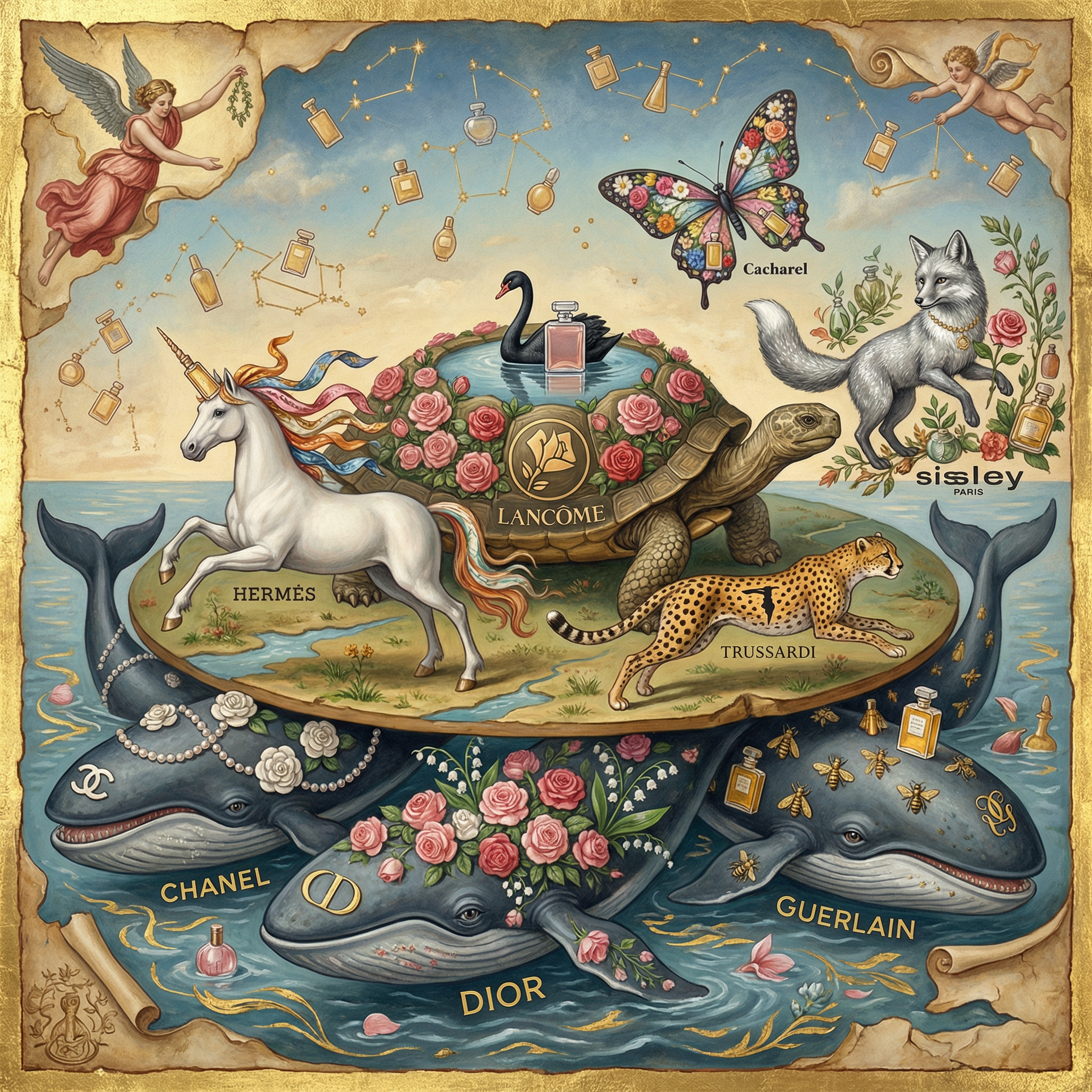
And now, let’s talk about creating a world. Why? Because in ancient myths and legends of many peoples, the world rested on three whales and a turtle, and each people saw their own truth in this. But scent appeared much earlier than this legend…
Scent is the most ancient sense. Evolutionarily, olfaction appeared first among all sensory systems even in the most primitive multicellular organisms (more than 500–600 million years ago). Vision, hearing, and other “higher” senses appeared much later (hundreds of millions of years afterward), when the brain had already become more complex and the thalamus (the central “distributor” and filter of consciousness) emerged.
That is why olfaction remained the most “primitive” and direct: it is directly connected to the most ancient parts of the brain — the limbic system (emotions, memory, instincts). Scent almost completely bypasses the thalamus (the only sense to do so!). The thalamus is the “gateway of consciousness” — it filters and slows down information so we don’t get overloaded. Scent goes straight into the emotional-memory centers, directly to projections in the amygdala (center of emotions, fear, pleasure) and hippocampus (center of memory, especially episodic and emotional), bypassing these gates.
That is why:
- One breath — and you already feel nostalgia, fear, excitement, or disgust — even before you realize what exactly you are smelling.
- Scent triggers the brightest, sudden, bodily memories.
- Fragrances often influence mood, appetite, sexual attraction, or aggression unconsciously.
That is precisely why perfume can pierce us right through: it speaks directly to that part of the brain older than words and logic. Through scent, your ancient instinct hears: “this is safe, delicious, sexual, old” — and the body reacts instantly.
The French writer Marcel Proust, the direct author of the “Proust phenomenon,” poetically explains it something like this:
“When from the ancient past nothing remains, after the death of people, after the destruction of things, only the more fragile but more alive, more immaterial, more enduring, more faithful smell and taste still remain for a long time, like souls, waiting, hoping, carrying on their almost impalpable drop the immense edifice of memory.”
The scent of the softened madeleine cake soaked in lime-blossom tea brought back to adult Marcel Proust full-of-details childhood memories that seemed completely forgotten. This literary episode gave the name to the ability of smells to provoke memories — the Proust phenomenon.
In drier scientific language, it is called involuntary autobiographical memory, and when smell is the provocation, the hook of important memories, the trigger — odor-evoked memory.
Studies (fMRI, 2000–2020s) confirm: when a smell evokes a memory, the amygdala and hippocampus activate more strongly than with visual or auditory triggers. Smells often bring back the earliest, emotionally charged childhood memories — because olfaction develops already in the womb and has, so to speak, memory of the world without conscious perception.
So, let’s return to the creation of the world and the three whales. After all, on what the world of perfumery rests is probably no less important, since scents hold such power over the human world.
The legend says:
The three whales are the fundamental, eternal pillars without which perfumery civilization would have sunk long ago.
The turtle is ancient wisdom and history, slowly but inexorably carrying the entire fragrant world on its back. In my fantasy view, the World of Perfumery looks like this:
Guerlain — the first whale (the most ancient and heaviest) Guerlain has stood at the very top for almost 200 years (since 1828). Shalimar, Mitsouko, L’Heure Bleue, Nahema, Samsara — these are not just fragrances, they are entire eras and textbooks of perfumery. Without Guerlain, modern niche and luxury perfumery would be completely different. This is the ancient French whale-teacher, the whale-tradition, the whale-“true French perfumery”.
Chanel — the second whale (the most famous and influential one) Chanel №5 (1921) is literally the fragrance of the 20th century, the perfume that even people who have never smelled perfume in their life know about. Coco, Chance, Allure, Coromandel — the house that turned perfume into part of fashion identity. If Guerlain is aristocracy, then Chanel is the icon of 20th-century elegance.
Christian Dior — the third whale (the most sensual and post-war one) Miss Dior, J’adore, Poison, Diorissimo, Sauvage — Dior brought a new femininity after the war, floral luxury, and later a very powerful masculine explosion. A whale that knows how to be tender and at the same time commercially very aggressive. Post-war luxury + modern approach.
Lancôme — the “optimistic turtle” that smiles and sells billions. Founded in 1935, it launched with five fragrances right away at the World’s Fair in Brussels. Icons: Trésor (1990 — one of the best-selling women’s fragrances of all time in the 90s), Poême, Miracle, Hypnôse, and above all — La Vie Est Belle (2012) — literally the best-selling women’s fragrance of the last 10–15 years in many countries, including France. Lancôme is French sweet, feminine, mass luxury that almost everyone likes. It’s not as rebellious as YSL, but much more commercially stable and influential in everyday reality.
I can’t help but add here the image of the “Ancient Serpent Coiling Around Everything”: Coty, without whom nothing would have existed on an industrial scale. François Coty in the 1904–1920s literally invented the modern perfume industry: mass production, beautiful bottles (he worked with Lalique and Baccarat), marketing, making luxury accessible to the middle class. L’Origan, Emeraude, Chypre de Coty — these are the direct ancestors of Shalimar, Mitsouko, all chypres and fougères.
Now let’s add more recent characters to the Picture of the Perfume World:
Hermès — this is a white unicorn gracefully galloping beside the turtle, sometimes even overtaking her on the turns. It’s not as ancient as Guerlain (Hermès’ perfume line started in 1951 with Eau d’Hermès, seriously developed from the 2000s). But at the same time, it is incredibly aristocratic, pure, refined, and consistent in its philosophy. Fragrances like Terre d’Hermès, Eau des Merveilles, 24 Faubourg, Twilly, Galop d’Hermès — always give the feeling of “expensive air,” freedom, quality without shouting.
Personally, I adore Jour d’Hermès and consider it ideal, aristocratic, and sexy at the same time — a fragrance for autumn-winter. It’s very good for business negotiations when you need to soften and charm the opponent. Proven. And if you want to be original and choose something out of the ordinary, I recommend Un Jardin Sur Le Nil Hermès for men and women. An unboring yet wearable fragrance. Fresh, subtle, but without aggression; sometimes it reminds me of the scent of herbs in a sauna… With it, you feel special; it’s quiet and persistent, like it’s “always yours.” If Jour d’Hermès is charm on full blast, then Un Jardin Sur Le Nil Hermès is charm of oneself, of one’s inner world. If you want to be impenetrably calm and at peace with yourself — buy it.
Givenchy — the second turtle (or “turtle-elegance”)
“I don’t need a bed to prove my femininity. I can be sexy just by picking apples from a tree or standing in the rain.” — Audrey Hepburn
Givenchy was founded in 1957 (L’Interdit — created specifically for Audrey Hepburn, one of the first “personal” celebrity fragrances). Sexuality without overt sexuality, in my opinion, is what Audrey and Givenchy are about.
an artistic image created by the article’s author based on personal memories evoked by Givenchy perfume
Icons: L’Interdit (1957 / modern versions — classic with tuberose, jasmine, vetiver; symbol of elegance and “forbidden fruit”), Amarige (1992 — powerful, sweet-floral tuberose bomber, very recognizable from the 90s), Organza (1996 — oriental-floral chic with spices and vanilla), Very Irrésistible, Ange ou Démon, Irresistible (modern hit). Givenchy has always been about French elegance with a touch of audacity, about friendship with Audrey (which adds a romantic halo), but at the same time it’s not as “explosive” as YSL and not as mass-dominating as Lancôme in the 2010s. It holds the balance between classic and luxurious accessibility.
Golden cheetah — Trussardi
Personally, I really like Donna Trussardi (sunny jasmine tea + citrus + cream). It slightly reminds me of Dolce & Gabbana Light Blue and Mugler Devotion, but Donna is cozier and more classic. Donna is “sunny tea with jasmine, lemon, and cream” in a bottle. With the speed and grace of a leopard — Donna Trussardi soared in popularity in the 2010s as one of the most compliment-getting and universal fragrances. Italian chic — the Trussardi house (since 1911 — leather, fashion, greyhounds on the bottles) has always been about effortless elegance, like a good leather bag or a white suit on the Mediterranean. Not a foundation, but elite — no 200-year history like Guerlain, no global influence like Chanel №5, but in the 2010–2020s it became one of the most beloved “non-giants”: high quality, originality of the rare jasmine tea note that suddenly reveals itself in the evening (proven!), good longevity (6–10+ hours), and a pleasant trail.
Kenzo in my mythological construction of the perfume world is a bright, exotic parrot with a poppy flower in its beak, who flew from Japan to Paris and soars high above the water, attracting attention with its freshness, color, and unusualness. A Japanese take on French perfumery — fresh, floral, yet persistent, with an urban twist. A poetic outsider who brought “a flower to the city.”
I really like Kenzo Ciel Magnolia (Eau de Parfum, 2022). A kind of zen-musk with flowers; on my skin it sounds bright, echoing my beloved Narciso Rodriguez. This is the first fragrance of the entire Memori collection (2022), created by Quentin Bisch (the same nose behind Fleur Narcotique by Ex Nihilo and Bois Impérial).
Kenzo Parfums started in 1988 (first — Ça Sent Beau / Kenzo de Kenzo), but the real breakthrough came in 2000 with Flower by Kenzo — one of the most recognizable and best-selling women’s fragrances of the late 20th – early 21st century. The house belongs to LVMH (like Dior, Givenchy, Guerlain), but always keeps its Japanese-French identity: nature, flowers, freedom, lightness, urban minimalism with an Eastern accent.
Flower by Kenzo (2000, Alberto Morillas) — an absolute legend: powdery-floral poppy (which in reality has no scent, but here — powder + violet + Bulgarian rose + vanilla + white musk + a hint of rice). Symbol of “urban nature,” powdery, soft yet persistent; it influenced many “clean, powdery” fragrances (from niche to mass-market).
The next hero of the Perfume World is an exquisite silver fox with a rose in its paws, creeping quietly and elegantly along the border between haute parfumerie and niche. Sisley Paris — one of the most elegant and high-quality houses in luxury.
Founded in 1972 by Hubert d’Ornano (son of Lancôme’s founder), but perfumery started in 1976 with Eau de Campagne — this fresh green unisex still on sale. A French luxury house specializing in high-end cosmetics, skincare, and premium perfumery. It’s not as ancient and heavy as the whales Guerlain or Chanel, and doesn’t carry mass love like the Lancôme turtle, but it’s a highly respected and refined guardian — a symbol of French sophistication, nature, the d’Ornano family memories, and expensive, natural ingredients.
The fragrance Izia, adored by my Moscow friend with the French name Polina, reminds us of our joint trip to Italy in 2018, and personally to me it seems similar to Hermès citrus fragrances in its overall “garden freshness.” No, Izia Sisley Paris is not “similar” to Hermès in the sense of a “duplicate,” but yes, it’s in the same aesthetic — fresh, high-quality, “expensive leather,” rose with citrus and air.
Key icons of Sisley
Eau du Soir (1990, classic): chypre floral spicy — mandarin + grapefruit + pepper → lilac + jasmine + rose + iris + clove → warm base. Elegant, evening, “eternally feminine,” inspired by the gardens of the Alcázar in Seville at sunset. Many say “90s classic, but timeless.”
Izia (2017): floral woody musk — unique rose + fresh notes + musk. Intimate, musky, “second skin,” very compliment-getting.
Soir de Lune (2006): tuberose + rose + oriental — dark, sensual, “moon in the night,” mystical.
Le Parfum (2025, new): citrus aromatic unisex — lemon + verbena + lavender + mimosa → woody-amber base. Fresh, light, for hair and body, great for layering.
Eau de Campagne (1976): green, botanical, “French countryside” — tomato leaves + basil + grass.
Cacharel in our mythological construction of the perfume world is a bright, romantic butterfly (or freedom-butterfly with floral wings), bringing lightness, youth, romance, and an accessible dream.
Cacharel is not a whale (no ancient history and global foundation like Guerlain or Coty), not a turtle (doesn’t carry rebellion or mass sales like Lancôme), but it is one of the most influential “youth” houses of the 70s–2000s, a symbol of French romance, freedom, and “first love” in perfumery.
Cacharel is youth in a bottle; many have used NOA for years and miss the discontinued Promesse…
For me, NOA is the spring of Moscow students in the 2000s; I often buy myself a bottle in spring and mentally salute our youth..
Founded in 1958 as a fashion brand (Jean Bousquet), perfumery started in 1978 with Anaïs Anaïs — literally the first accessible designer fragrance for young women, which became a global hit and the “first fragrance” for millions. Cacharel has always been about youth, romance, lightness, freedom.
Key icons of Cacharel (house legends)
Anaïs Anaïs (1978) — an absolute legend: white flowers (lily, hyacinth, jasmine, rose, lily-of-the-valley), transparent, fresh, romantic bouquet. One of the most influential florals of the 20th century, the “first fragrance of love” for many generations. Still a bestseller, often called “one of the most significant fragrances in history.”
LouLou (1987) — bold, powerful, oriental-floral (plum, cinnamon, iris, tuberose, vanilla, incense). One of the top sellers of the 80s, controversial (some love it, some say “too loud”), symbol of the 80s: big hair, shoulder pads, seduction. Very polarizing, but timeless. Still relevant, very feminine and long-lasting.
Noa (1998) — clean, transparent, musky-floral with coffee, musk, vanilla, iris. “Cashmere on skin,” serene, cozy, one of the most beloved “clean” fragrances of the 90s–2000s (Luca Turin praised it).
Amor Amor (2003) — fruity-floral explosion (pink grapefruit, mandarin, raspberry, rose, vanilla). Sexy, passionate, bubbly — one of the best fruity-florals ever, “fun and sophisticated.”
Cacharel Promesse (2005, Eau de Toilette for women, creators Carlos Benaïm and Sophie Labbé) — this is a romantic, light dream-butterfly from the Cacharel flock, fluttering especially tenderly and spring-like, landing on flowers of romance and fruity freshness.
Eden (1994) — avant-garde, polarizing: watery notes + tropical fruits + patchouli + tuberose. “Bog sorceress” vibe, futuristic for the 90s, legendary advertising.
Another serious character — Creed. In my opinion, its image is a white aristocratic dragon. Exists since 1760 (according to house legend), but the real powerful rise came in the 20th–21st centuries. Aventus, Green Irish Tweed, Silver Mountain Water — these are no longer just fragrances, but cultural phenomena. Creed is a bridge between old aristocracy and modern niche/luxury. However, reviews about it in 2026 are quite mixed; there’s no talk here of mass love or influence on perfumery. Yet its longevity and unusual trail, capable of overcoming heat, kilometers, and mood swings — intrigues and captivates.
So, in conclusion, my tenderly beloved and currently irreplaceable Narciso Rodriguez
[image: an image inspired by the fragrance from Rodriguez, created by the article’s author]
In my mythological construction of the perfume world — this is a black musky swan (or mystic swan gracefully swimming on dark water), which appeared relatively recently (first fragrance in 2003), but quickly became one of the most recognizable and influential “musky” houses of the 21st century. It has no centuries-old history or global industry upheaval, but it is very close to the elite circle — next to the white unicorn Hermès. This is the house that redefined modern musk as clean, skin-like, intimate, addictive, and sexual, without shouting. That is, unlike Givenchy, here we have natural sexuality “without the entourage” ; it smells like “your skin, but better.”
History and why exactly a musky swan
Narciso Rodriguez (designer, Cuban by origin, raised in the USA) launched perfumery in 2003 with Narciso Rodriguez For Her (EDT/EDP, creators Christine Nagel + Francis Kurkdjian). Inspiration — Egyptian musk oil that he wore in his youth (mixed with other oils). It was a revolutionary musk of the 2000s: clean, skin-like, powdery-floral, with osmanthus, amber, vetiver, and patchouli — intimate, sexual, yet elegant. The fragrance became an icon: still in sales tops, compliments, and “what is that scent?” queries.
The house belongs to Shiseido (Beauté Prestige International), always focuses on musk as the main note — different facets: clean, powdery, rosy, dark, amber.
Of course, this is not the complete picture of the Perfume World, but only the main strokes, yet I am sure that this overview will become your guide in the world of fragrances and help you choose that very perfume at the right time in the right place…