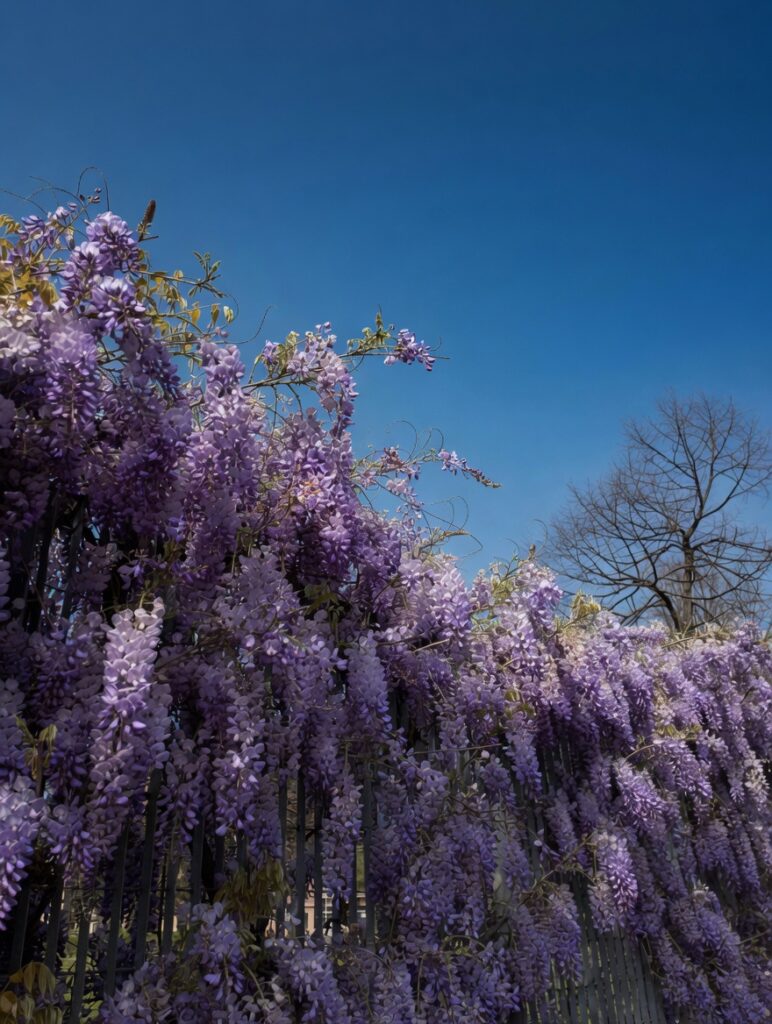
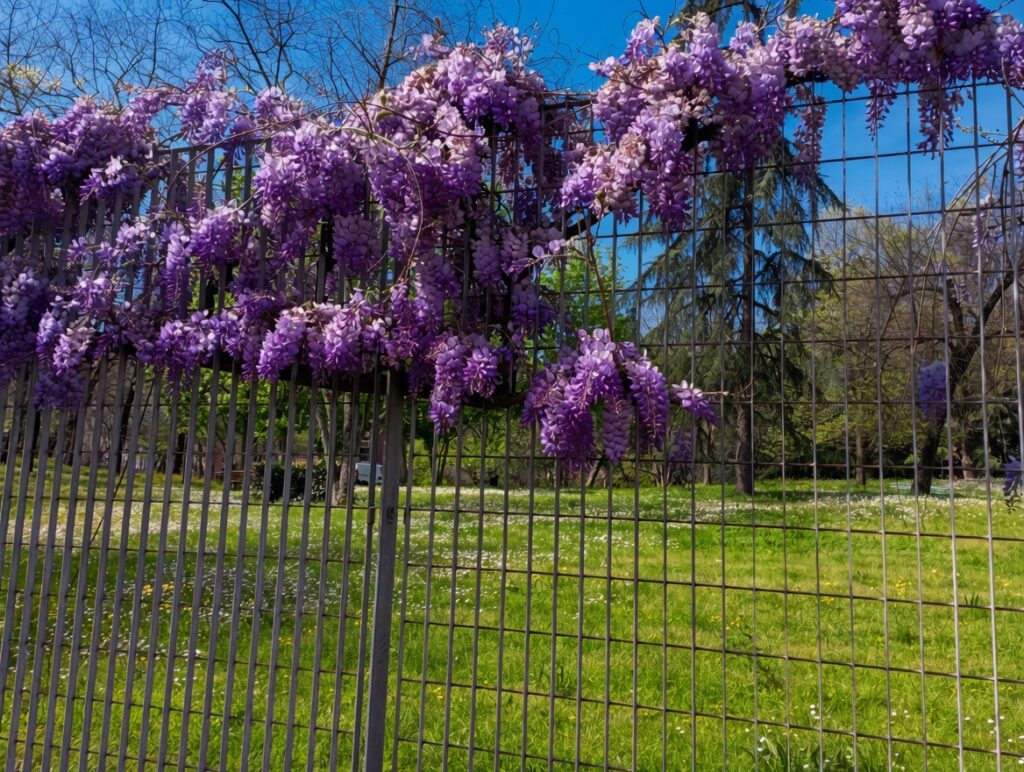
They say that if you gaze at a blooming wisteria for a long time, you can hear its branches whispering the names of those you once loved… It slows down time, takes away a little sadness, and gives you a quiet happiness in return. And you can fall in love — not with a person, but with spring itself.
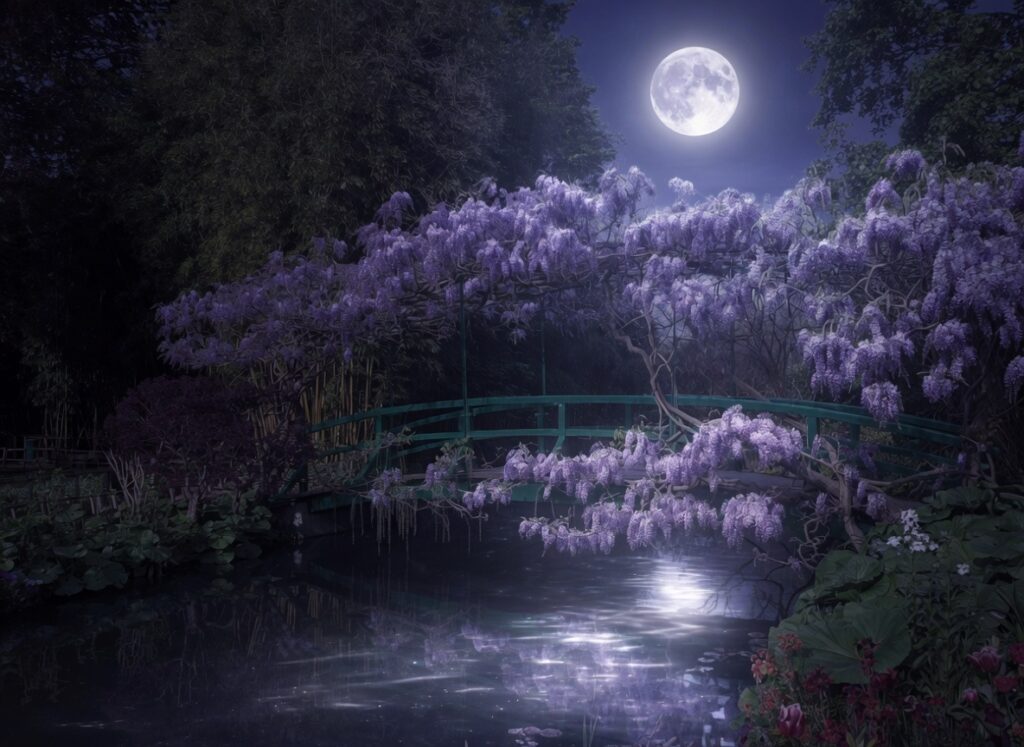
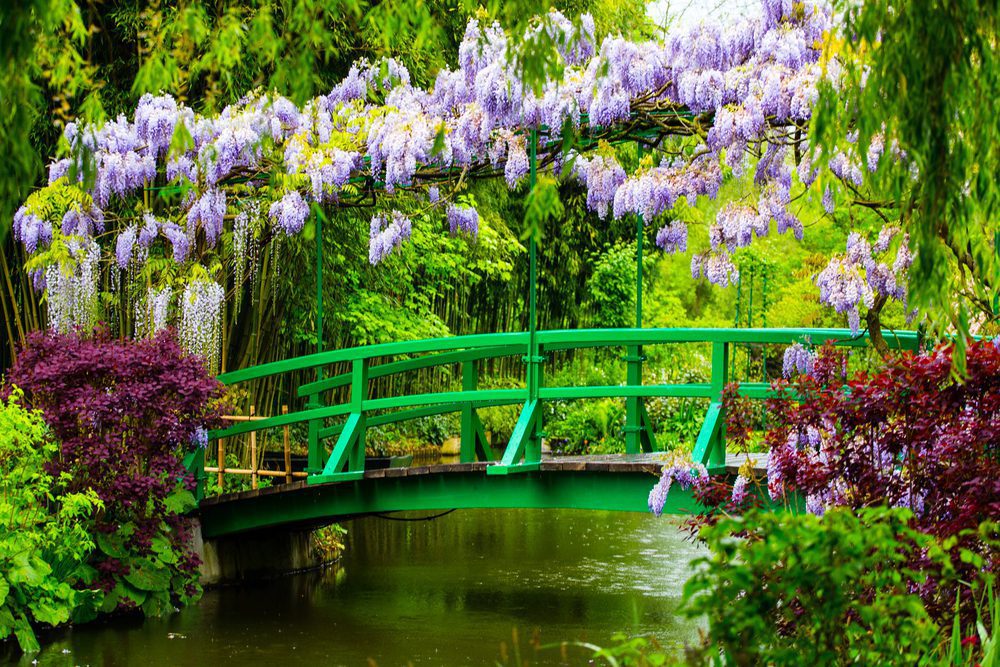
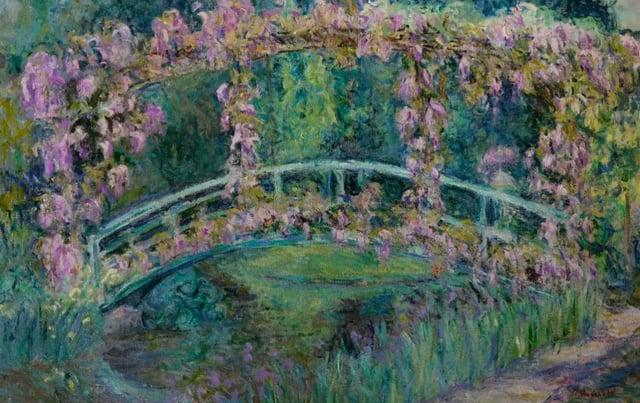
Japanese Bridge, Claude Monet’s Garden, Giverny
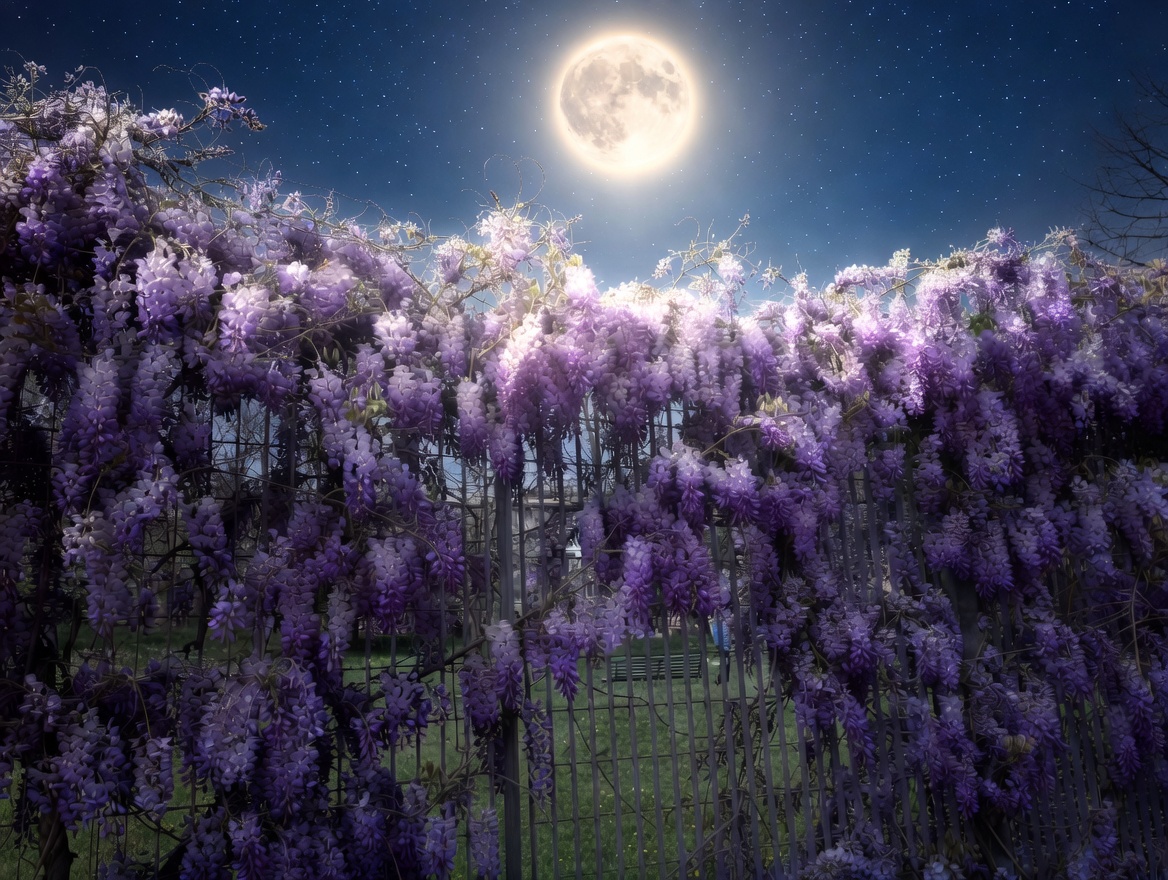
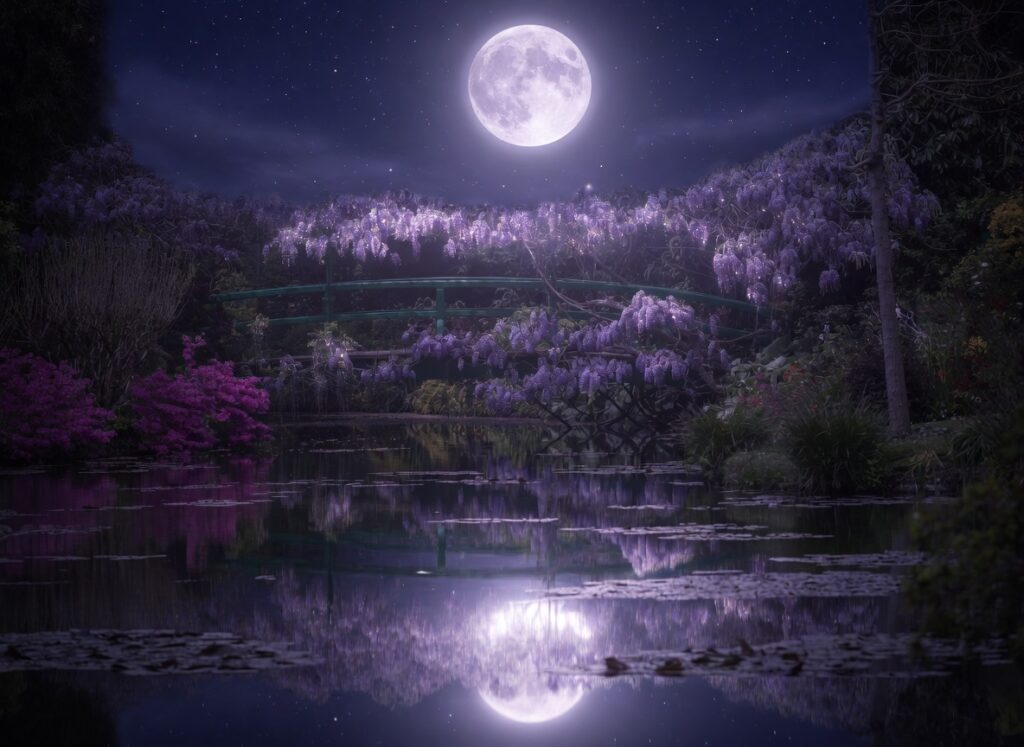
It is considered dangerous for men to approach a blooming wisteria at night… Under the full moon, one can see the Princess descending along its vines — the one who makes the trees bloom and then leaves a lifelong nostalgia in the heart for something indescribably beautiful. For no woman can equal her in beauty…
copyright by Anastasia Gracheva
The wisteria (Wisteria sinensis) is revered no less than cherry blossoms. In spring in Japan, hanami — the contemplation of flowers — is held beneath its branches.
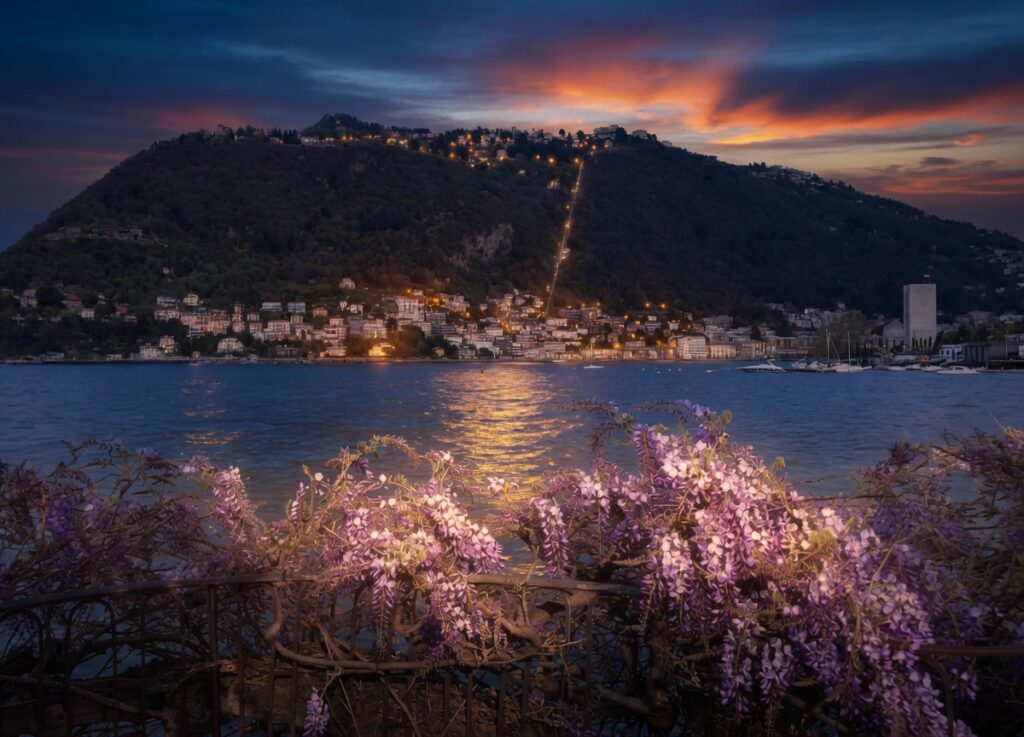
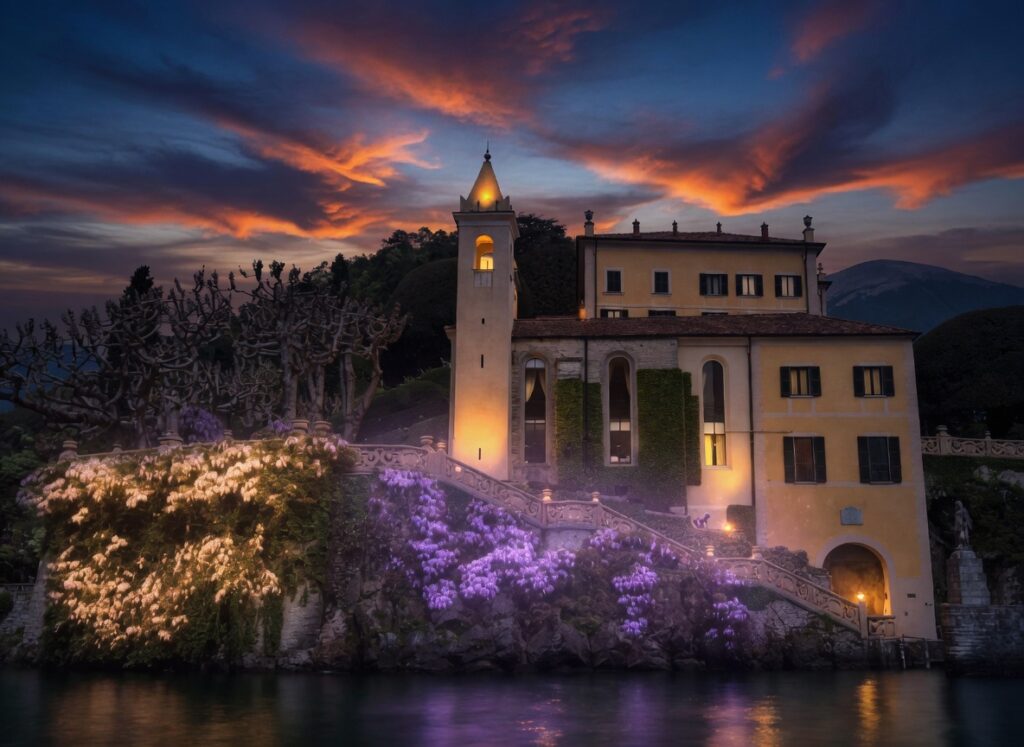
The video with the garden wisteria against the backdrop of mountains, shown above, comes from Italy, specifically from South Tyrol,ITALY from the Russian-Italian guide Vladimir Grachev (https://www.giditaly.ru/). April–May is indeed the true “wisteria season,” when special open days and evening illuminations are organized in gardens across Italy, France, Germany, and England. It is especially beautiful on Lake Como and at Bardini, where locals and tourists call this period “Wisteria Magic” or “Stagione dei Glicini.”
` In Giverny, in one of France’s most famous gardens — that of the artist Claude Monet — the wisteria covers the famous Japanese bridge with flowers usually in early to mid-May, a little later than in the Parc des Impressionnistes on the outskirts of Paris (a garden in Monet style, author’s note).
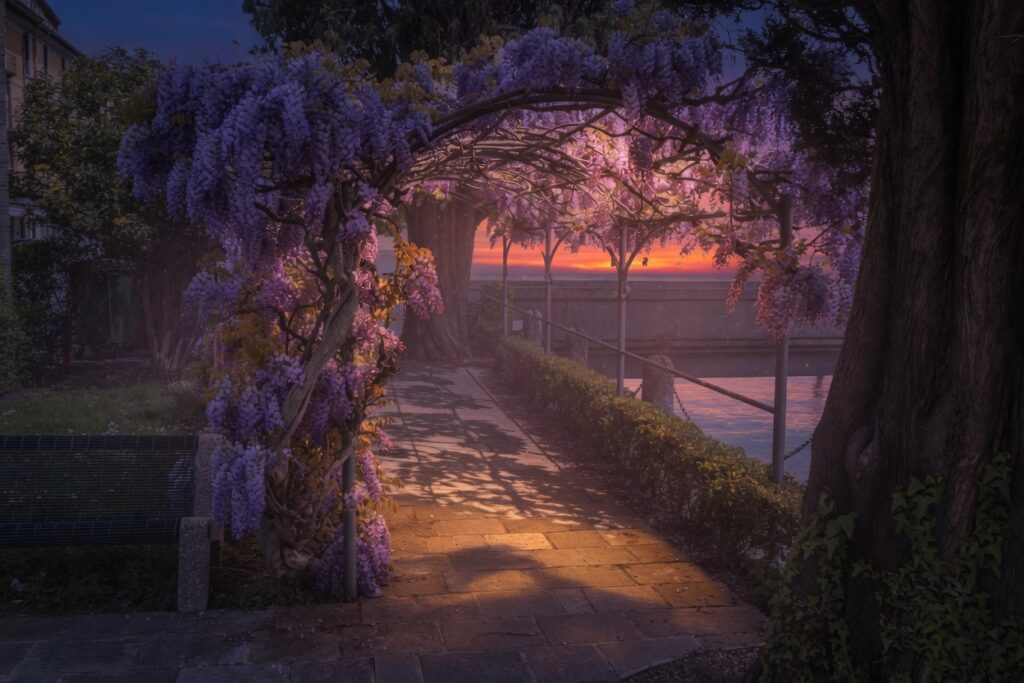
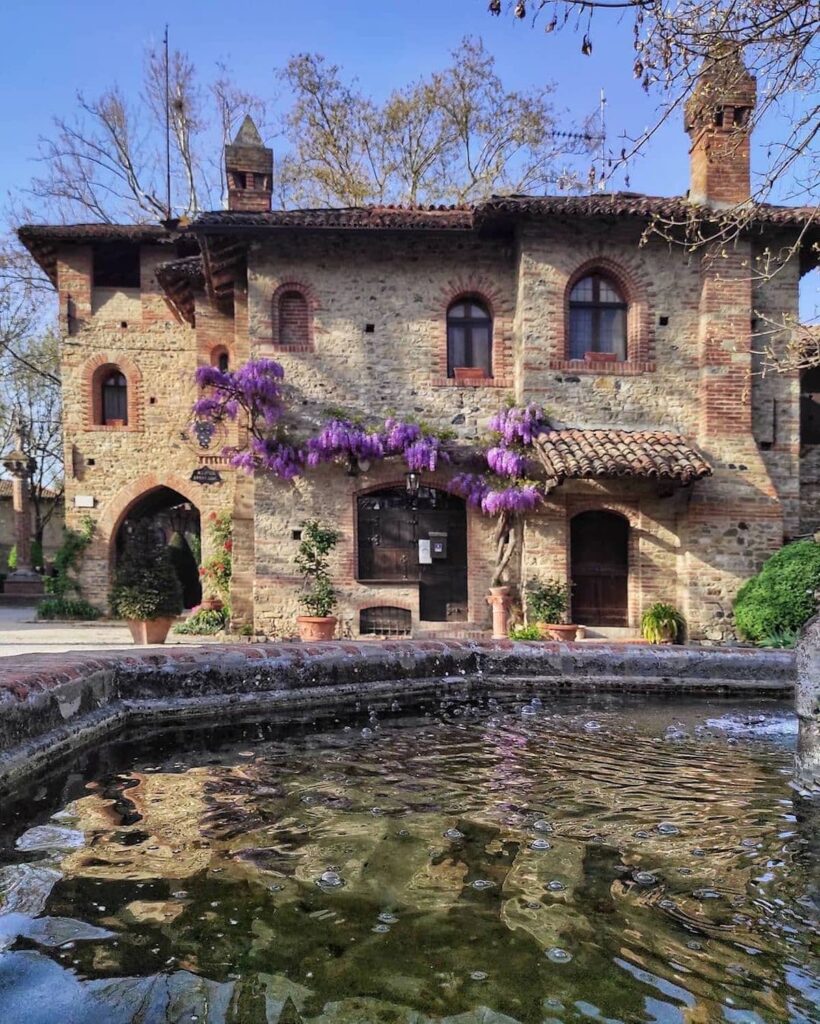
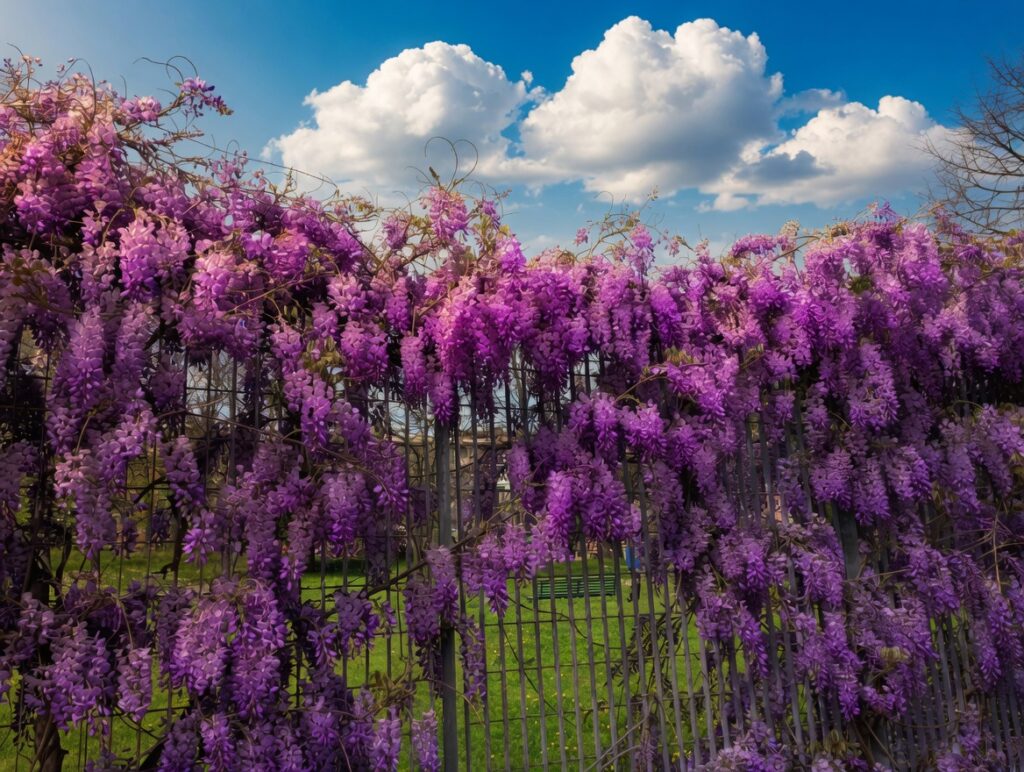
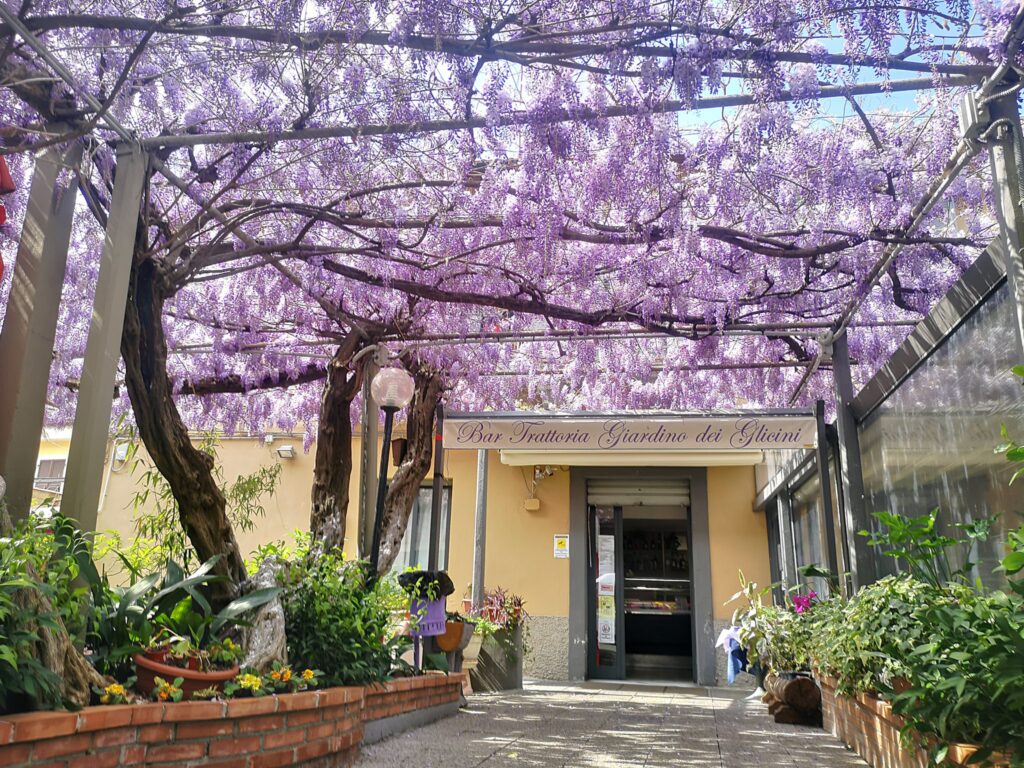
Here are my favorite wisterias in northern Italy, on the Ligurian Riviera in La Spezia and the surrounding region:
photo by Paolo Gite e cene last minute La SpeziaGrazzano ViscontiMaggiolina Park, La SpeziaLa Spezia
It is no coincidence that wisteria has become a symbol of feminine beauty — its cascading clusters resemble the long sleeves of a girl’s kimono. It is also a symbol of love — intoxicating and dangerous, just like the wisteria itself. This vine is not only beautiful; it is almost entirely poisonous. Only touching the flowers and inhaling their fragrance is safe.
Wisteria also symbolizes longevity — some specimens live 100 to 1,200 years. In folklore (for example in Kyushu), wisteria brings good fortune to people and weakens demons by wrapping them in its vines and draining their strength.
copyright by Anastasia Gracheva
The wisteria is surrounded by poetic and sometimes tragic legends. It is said that above the crater of Mount Fuji, in a luminous cloud, floats a goddess. On her shoulder rests a branch of wisteria. The goddess’s name translates roughly as “Princess who makes the trees bloom and the nightingales sing sweetly.” She protects the sacred mountain from impurity and can bestow upon man the elixir of long life.
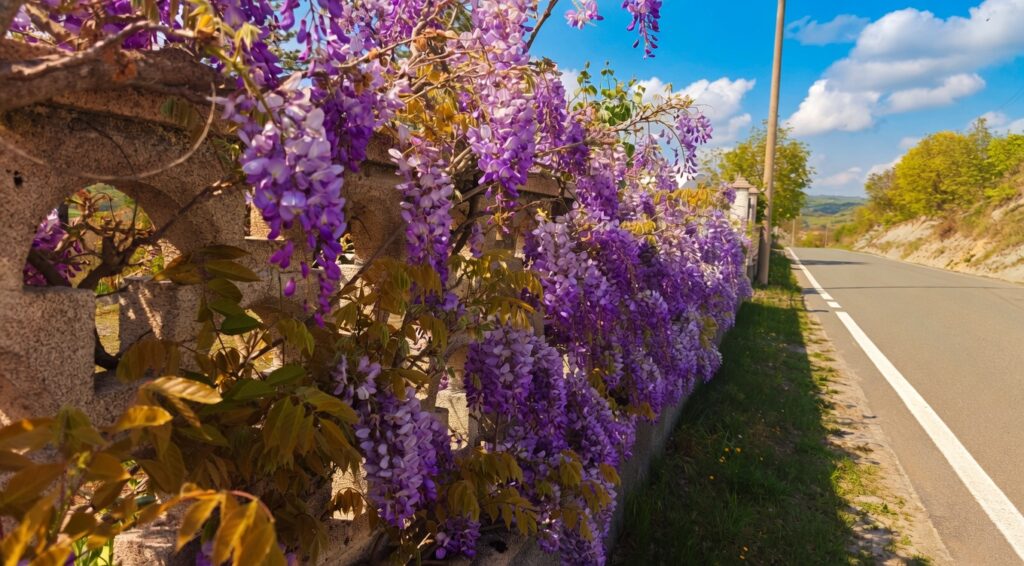
Savona, Italy photo by Alberto R.
The “Mystery of the Wisteria” in different Cultures
Japan — longevity, luck, romance, modesty, and elegance. The Fujiwara clan (“wisteria field”) made it their symbol during the Heian period.
China — success, wisdom, prosperity (the clusters resemble the purple belts of officials).
Victorian England — “I cling to you” (because of its tenacious vines), passionate or obsessive love.
Buddhism — the spiral growth symbolizes consciousness aspiring to the divine.
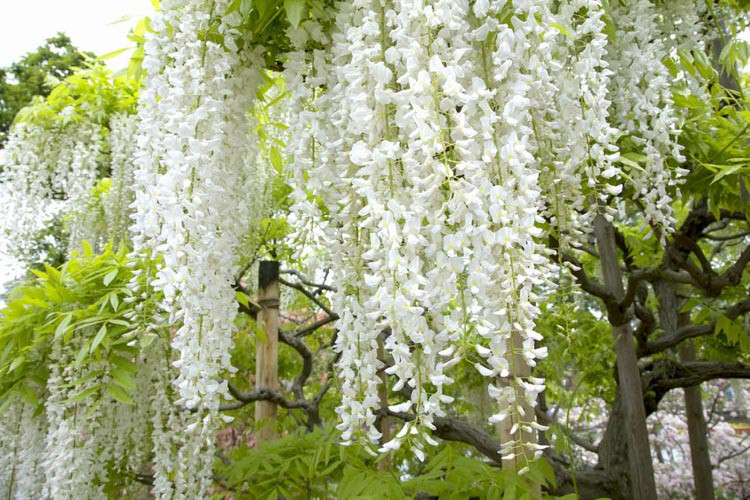
Russia: a symbol of southern beauty and spring magic. In southern Russia, wisteria is considered a symbol of spring, joy, and happiness. Its blooming is perceived as a true miracle and celebration. It does not carry heavy mythology, but rather conveys lightness, beauty, and at the same time resilience. For example, white wisteria (Wisteria alba) easily withstands frosts down to -10…-15 °C.
Wisteria alba
Perfumes with Wisteria notes
Wisteria is a delicate floral note, slightly spicy, with nuances of lilac, jasmine, and light greenery. In perfumery, it is rarely the main star, but it gives compositions a spring lightness, airiness, and refinement. Here are the most famous and beloved fragrances with a noticeable wisteria note:
Lanvin Éclat d’Arpège (2002) — One of the most popular and recognizable wisteria fragrances. Light, fresh, green-floral. Notes: green tea, wisteria, lilac, peony, musk. Perfect as a daytime spring scent — pure and feminine.
Burberry My Burberry Blush — My personal favorite. Tender rose, powdery, romantic. Wisteria blends with jasmine, rose, and violet. Light, elegant, ideal for everyday wear.
NEST Fragrances Wisteria Blue — A beautiful modern blend of French wisteria with Bulgarian rose, jasmine, and aquatic notes. Fresh, watery, spring-like — like a walk under a flowering arch.
Marc Jacobs Daisy Dream (and flankers) — Light, dreamy, fruity-floral. Wisteria with apple, pear, and jasmine. Very popular as a “daytime” fragrance.
L’Occitane Glycine — Fresh and modern with wisteria, freesia, and peony.
Jo Malone Wisteria & Violet and Wisteria & Lavender — Light, cologne-style.
Gucci Guilty Elixir de Parfum Pour Femme — More intense, with spicy wisteria.
AERIN Wisteria — Delicate, with honeysuckle and musk.
Demeter Wisteria — Single-note, extremely realistic (spicy and watery).
Can You plant Wisteria near the house?
Short answer: Yes, but with great caution and proper preparation.
Wisteria is one of the most beautiful vines, but it is very powerful, aggressive, and “heavy.” Many people regret planting it too close to the house. For cultivation in northern countries, choose American varieties (Blue Moon) — they are more cold-resistant. The plant requires excellent winter protection, a warm spot near a wall, and regular pruning.
Wisteria (from Greek γλυκός — sweet), or wisteria (lat. Wisteria) — a genus of tall woody subtropical climbing plants of the Fabaceae family, with large clusters of fragrant lilac flowers. Widely used in landscape design.
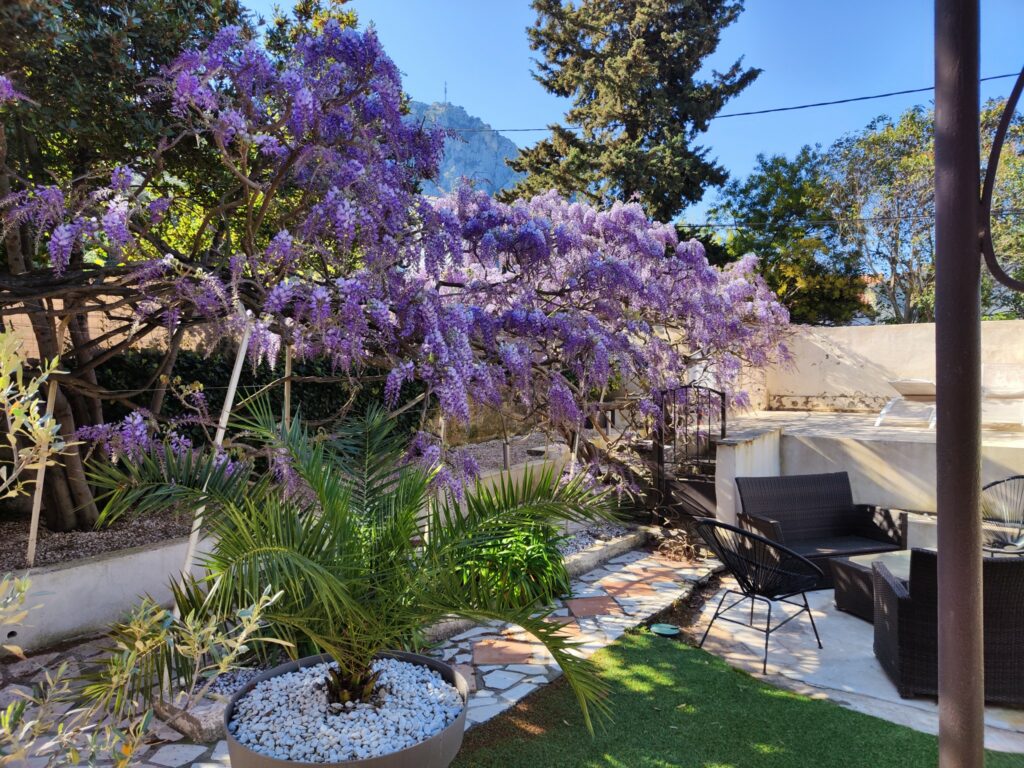
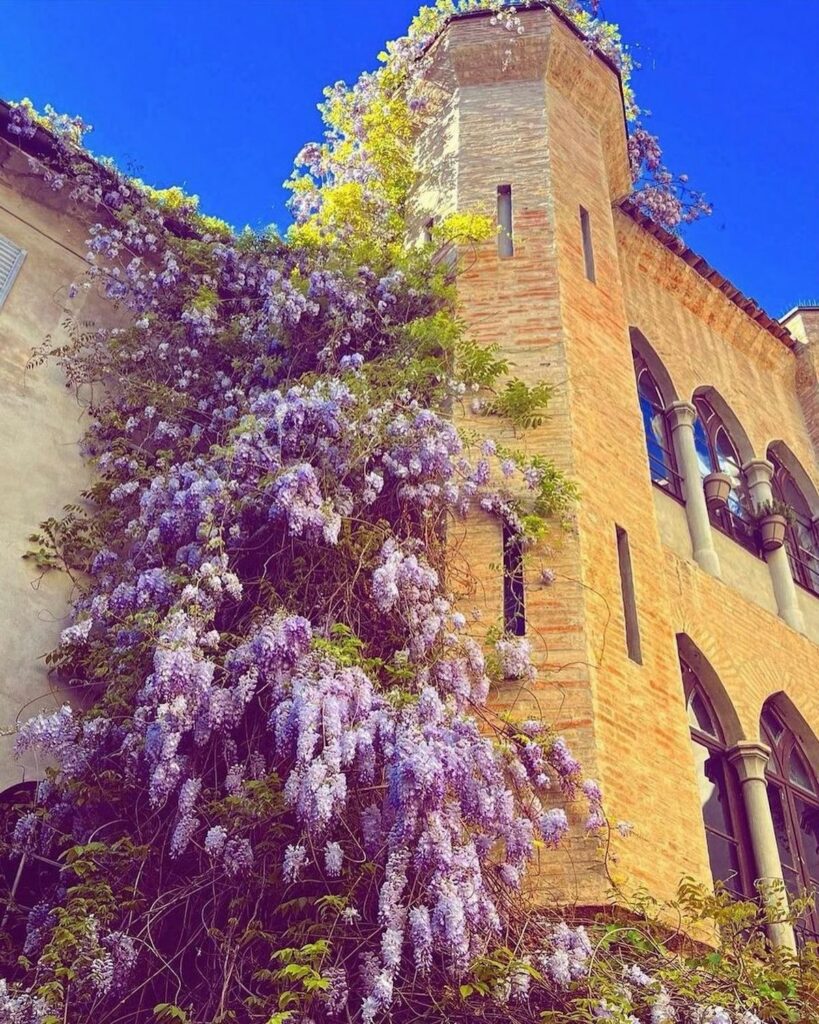
Toulon, France
Advantages of Planting Near the House
Creates an incredibly romantic look (especially on the south or southwest wall).
Provides shade and coolness in summer.
Long-lived (lives 50–100+ years).
In spring — a spectacular bloom right outside the windows.
Disadvantages and Risks (they are serious)
Powerful vines become thick and heavy over time — they can tear off gutters, deform siding, creep under the roof, and even damage tiles.
Roots are aggressive — they can penetrate foundation cracks, damage pipes, drainage, and septic systems (especially in old houses).
Grows quickly and “chokes” everything around if not pruned 2–3 times a year.
Poisonous (especially the seeds) — dangerous for children and pets.
Requires a very strong support structure.
Reggio Emilia, Italy
Recommendations if You Still Want to Plant It
Better not directly against the wall, but 1–1.5 meters away from the foundation.
Be sure to install a strong independent support (metal pergola, arch, or wires on brackets 10–25 cm from the wall). Let it climb the support, not the house.
South or southwest side — ideal.
Regular severe pruning is mandatory! Without it, after 5–7 years there will be chaos.
Do not plant near old houses with weak foundations or wooden walls.
Alternatives if You Fear the Risks
Plant wisteria near a separate gazebo, pergola, or arch in the garden.
Choose less aggressive climbers: clematis, atragene, actinidia, campsis (though also vigorous), climbing roses.
My advice: If you have a new, solid house, are ready to prune twice a year, and can build a strong support — plant it, it will be stunning. If the house is old or you’re not ready for constant control — better to choose another spot or another plant.
So, to romantics, travelers, and everyone simply in love with nature, I wish you to meet a blooming wisteria under a bright moon and surely hear how ancient dragons whisper and the nightingales of the Fuji goddess sing inside its lilac clusters. At that moment, you can make your most intimate wish — it will surely come true before the last cluster fades.