

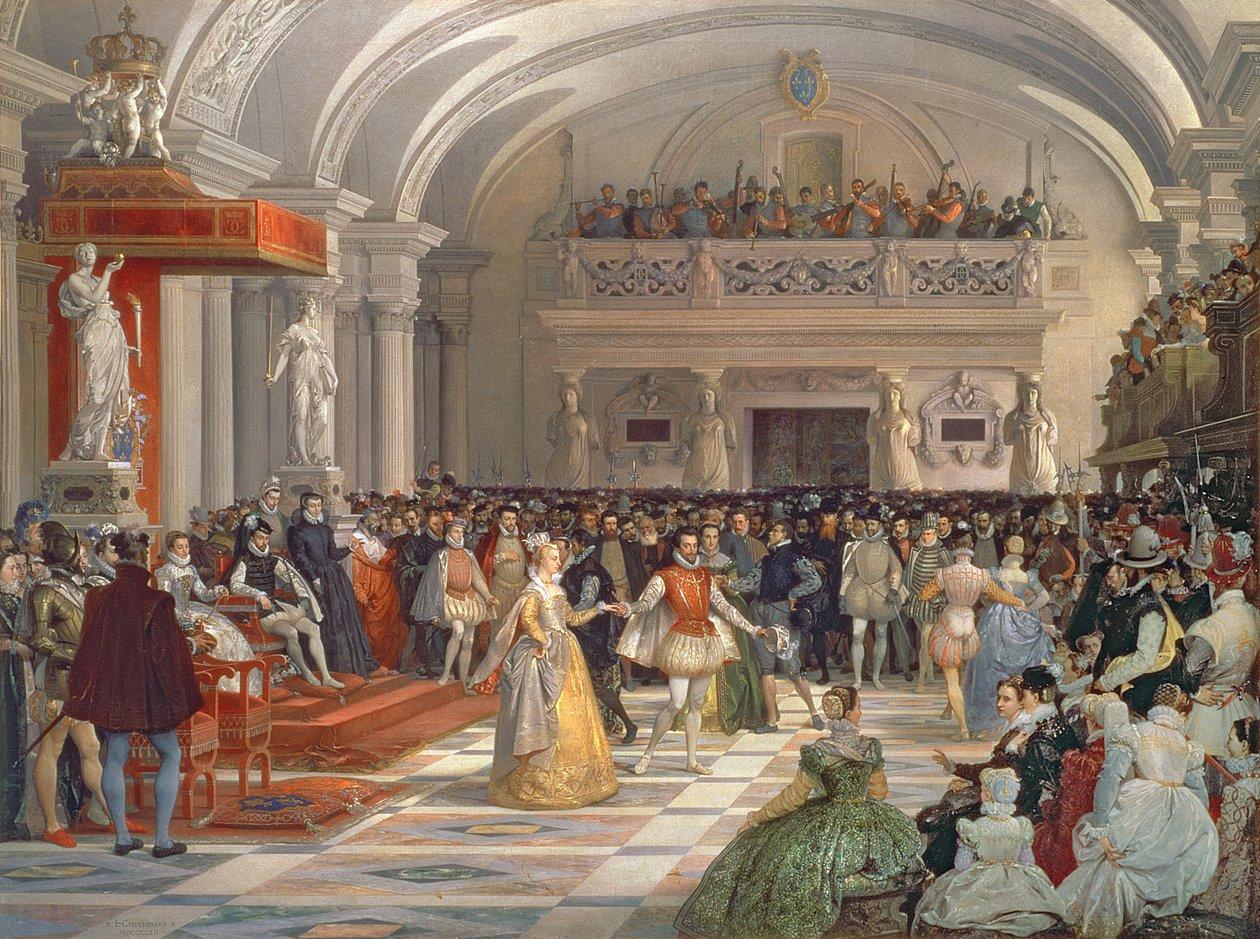
Marguerite de Valois, known as Queen Margot, was the sister of three kings of France: Francis II, Charles IX, and Henry III. She was born into the heart of the powerful Valois dynasty. Her mother was Catherine de’ Medici, nicknamed the “Black Queen” and “Madame Serpent” because of the suspicions of poisonings, secret murders, the use of toxins, and occult practices that surrounded her reputation.
Marguerite de Valois’s life was marked by romantic intrigues, forbidden relationships, jealousy, and sensational scandals
.
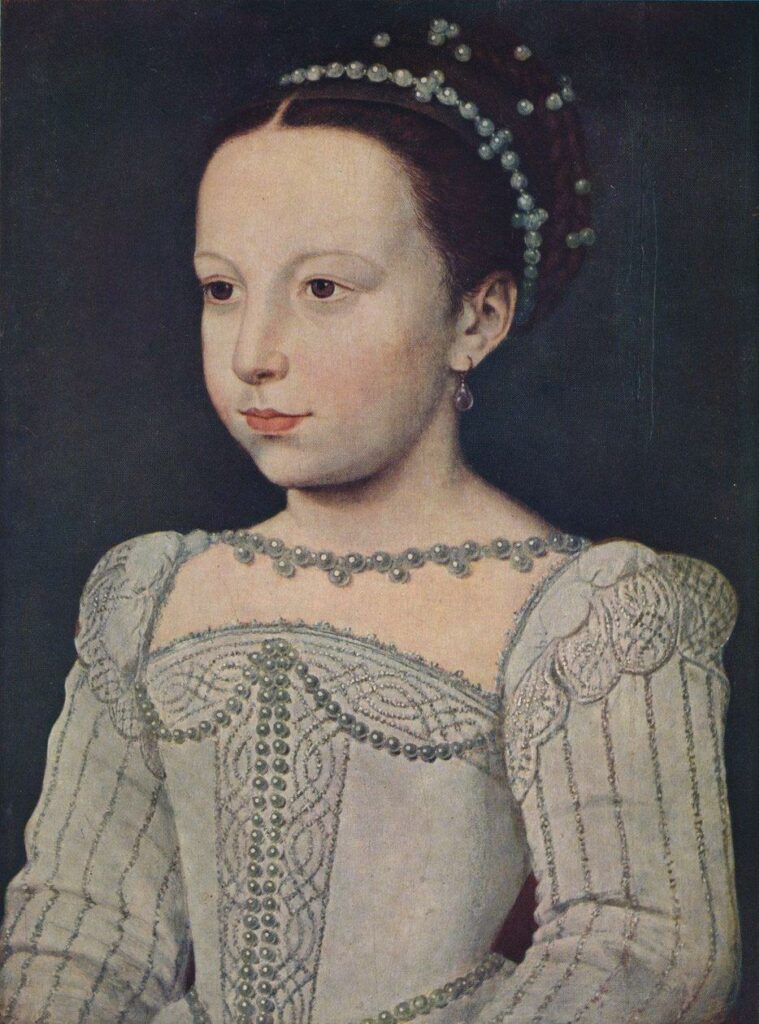
Her contemporaries considered her one of the most beautiful and captivating women at the French court. Numerous romantic affairs were attributed to her, including one with Henry, Duke of Guise. But her destiny was determined not by love, but by politics: the princess was married to Henry of Navarre, the future King Henry IV, in an attempt to reconcile Catholics and Protestants.
Just a few days later, however, on the night of August 23–24, Paris was struck by a massacre that would go down in history as the St. Bartholomew’s Day Massacre. The killing of the Huguenots began, and the violence soon spread to other cities. Thousands of people lost their lives.
Marguerite later described these events in her memoirs. According to her account, she awoke in the middle of the night to the sound of screams, cries, and pounding on her door. A wounded nobleman, fleeing his pursuers, burst into her chambers. Marguerite offered him shelter, putting her own life at risk.
Later, according to her own account, she rushed to the king and the queen mother and managed to obtain pardons for two other men close to her husband. Her position was terrible: she found herself caught between two hostile factions — the Catholics among whom she had grown up and the Huguenots to whom her husband belonged. Moreover, according to her memoirs, she had known nothing of the massacre being planned and feared for Henry’s life.
Thus, a royal marriage conceived as a symbol of reconciliation became the prelude to a massacre. Marguerite entered history not only as the central figure in a dynastic marriage, but also as a woman who, in the midst of a bloodbath, tried to save lives.
Another dark, almost Gothic story from Queen Margot’s life concerns Joseph de La Môle, who was executed in 1574 for his alleged involvement in a conspiracy against the king.
According to legend, Marguerite was in love with him and, after his execution, secretly had his severed head retrieved so that she could keep it as a memento of the man she had loved. There is no historical evidence confirming this episode, but the story has become one of the most famous romantic legends associated with the queen.
Her marriage was far from perfect. Henry of Navarre was famous for his numerous love affairs, and Marguerite had no intention of accepting the role of a submissive, forgotten wife. She, too, was linked to other men. Her freedom of behaviour provoked indignation at court, and her detractors even spread terrible insinuations about alleged intimate relations with her brothers. Such accusations were part of political slander and are not supported by historical evidence.
She Helped Her Husband’s Mistress Give Birth
In 1581, Marguerite found herself in a deeply humiliating situation: her husband, Henry of Navarre, had fallen in love with one of her ladies-in-waiting, the eighteen-year-old Françoise de Montmorency-Fosseux, known at court as the beautiful Fosseuse.
The young woman became pregnant by the king, and it was becoming increasingly difficult to conceal her pregnancy.
But the most extraordinary part of the story happened during the birth itself.
Henry asked his legitimate wife to help his mistress give birth in secret in order to avoid a scandal at court.
Marguerite agreed. She accompanied Fosseuse to a separate room, summoned her own physician and the women who were to assist with the delivery, and personally arranged all the necessary care.
In her memoirs, the queen describes this episode with remarkable composure. She recounts that a baby girl was born, but the child was already dead.
When Henry returned from hunting, he asked his wife to visit Fosseuse again. This time, however, Marguerite refused. She felt she had already done far more than her marital duty required.
Unlike many royal mistresses whose stories ended tragically, Françoise managed to build a new life. In 1596, she married François de Broc, Baron of Saint-Mars, with whom she had five children.
The most astonishing detail of this episode is that Marguerite did not merely tolerate her husband’s betrayal: she helped his mistress give birth, concealed the pregnancy, and effectively contributed to protecting her husband’s reputation.
All this while the queen herself remained childless.
But Did It Really Happen?
The story of Marguerite de Valois’s alleged secret heirs is one of the most scandalous and mysterious aspects of her biography.
Although the queen officially died without children, rumours circulated during her lifetime and even after her death that she had given birth to illegitimate children fathered by some of her lovers.
The Rumour of a Son by François de Champvallon
In 1581, Marguerite was rumoured to be pregnant by a man believed to be her lover, François de Champvallon.
The rumours even reached diplomatic circles. The English ambassador reported that the queen was said to have given birth to a boy in June. However, the ambassador himself expressed scepticism about the information.
Historian Kathleen Wellman notes that reports of the alleged pregnancy did indeed circulate, but there is no evidence confirming the birth of a child.
The Mysterious Père l’Ange
An even more curious story concerns a man known as Père l’Ange, a Capuchin friar whom some seventeenth-century authors described as Marguerite’s illegitimate son.
In a study published in 1902, the French historian Philippe Lauzun reported information suggesting that certain political pamphlet writers had attributed the maternity of this religious figure to the queen.
According to one later version of the story, his father was none other than Champvallon.
But there is an even more sensational testimony: the historian Scipion Dupleix wrote that a man belonging to the religious world had presented himself for a long time as Queen Marguerite’s son and had not been punished as an impostor.
This is a particularly intriguing detail: these were not merely rumours circulating at court, but claims allegedly made by a man himself about his royal ancestry.
Rumours of a Child in 1583
In 1583, rumours about Marguerite’s alleged pregnancy began circulating once again.
The queen fell ill, her physical appearance changed, and courtiers began to wonder whether she might be expecting a child by Champvallon.
Some contemporaries even went so far as to claim that she had secretly given birth to a boy.
Henry III believed the accusations and publicly reproached his sister for her romantic affairs and alleged pregnancy.
Marguerite categorically rejected these accusations and asked her mother to ensure that a woman she trusted could testify about the condition of her body, even after her death.
One of the most intriguing details of her biography is that, after Marguerite’s death, a man was identified as her illegitimate son.
A legend grew around his origins, but historians have been unable to confirm the relationship through documentary evidence.
And so, a queen who officially left no heirs nevertheless left behind a story about a mysterious claimant to royal blood.